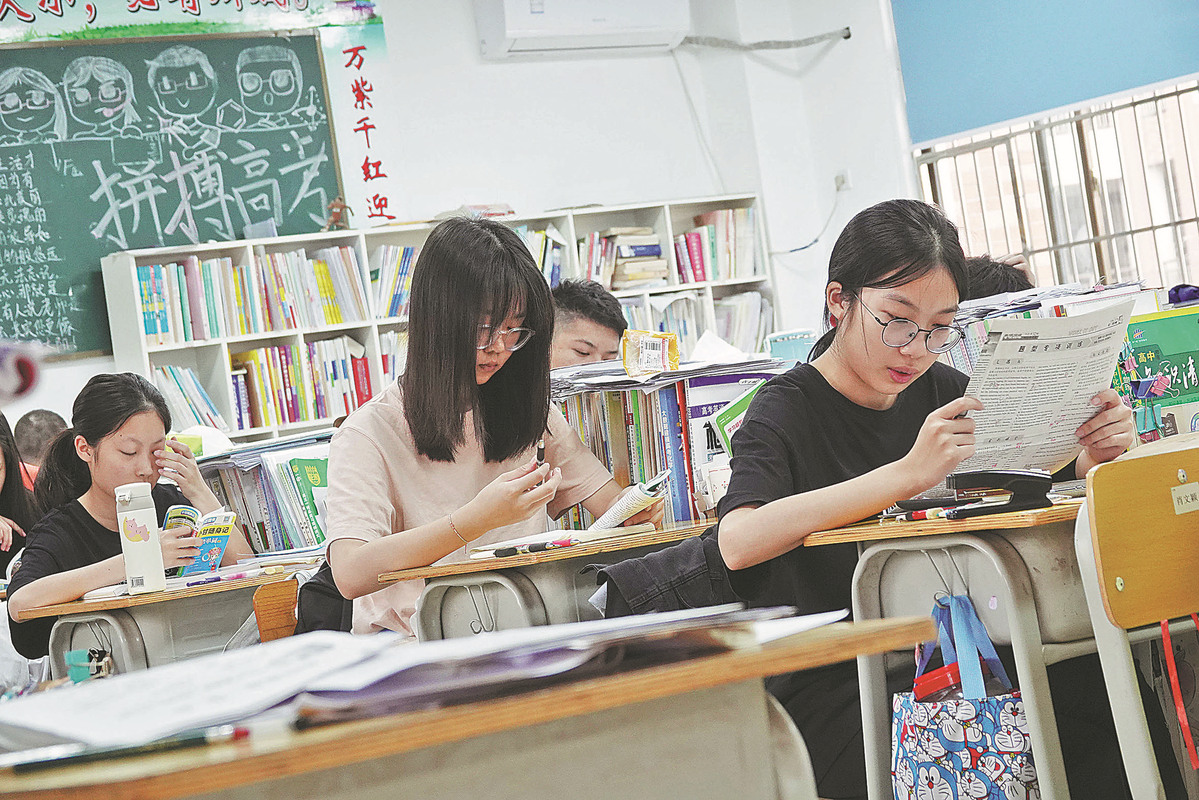
National College Entrance Exam
Introduction
The National College Entrance Exam (NCEE), commonly known as gaokao, is a standardized academic examination held annually in China. It is a critical examination for Chinese high school students, as it largely determines their eligibility for higher education institutions. The gaokao is a decisive criterion for university admissions and is often seen as a crucial step in a student's academic and professional journey. The examination covers a wide range of subjects, and students' performances are pivotal for their future educational and career opportunities. With millions of students participating each year, the gaokao is considered one of the most extensive and challenging examination systems worldwide.
History
The gaokao has a long and significant history in China, tracing its roots back to the imperial examination system used to select government officials. This legacy established a foundation for merit-based assessments in China. Modern gaokao as an entrance examination for higher education began in 1952, reflecting the state's need to identify and nurture talent for national development. It was suspended during the "cultural revolution" (1966-76) but was reinstated in 1977 as part of China's educational reforms. Since then, it has continuously evolved, adapting to educational needs and societal changes, while maintaining its importance as a gateway to higher education.
Structure and Components
The gaokao is a comprehensive examination that assesses students' knowledge and skills across various subjects. It typically includes compulsory tests in Chinese language, mathematics, and a foreign language, usually English. In addition to these core subjects, students must choose between science and liberal arts tracks, which determine the additional subjects they will be tested on. The reformed "3+1+2" model allows students more flexibility, letting them choose a combination of elective subjects according to their interests and strengths. This structure aims to cater to diverse educational goals and encourages students to pursue subjects that align with their potential career paths.
Impact and Significance
The gaokao holds immense significance in Chinese society, deeply influencing educational, economic, and social dynamics. It is widely regarded as a meritocratic platform that provides students from various backgrounds with the opportunity to access quality higher education. For many, particularly those from rural areas, the gaokao represents a chance to transform their socio-economic status. The examination encourages students to dedicate years of rigorous study and preparation, fostering a culture of educational excellence. Its results impact not only university admissions but also students' career prospects, making it a pivotal element in shaping China's future workforce.
Comparison with Other Examination Systems
The gaokao can be compared to other high-stakes examination systems around the world, such as the SAT and ACT in the United States or the A-levels in the United Kingdom. However, the gaokao is unique in its scale and intensity, with a broader scope of subjects and a greater impact on students' futures. Unlike many Western examination systems, the gaokao is a singular, comprehensive assessment, with results that significantly influence university placement. This contrasts with systems that allow multiple assessments or alternative pathways to higher education. Understanding these differences highlights the distinctive nature of the gaokao in the global educational landscape.
Cultural Influence and Representation
The gaokao is deeply embedded in Chinese culture, symbolizing both opportunity and challenge. It is often depicted in media as a rite of passage for students, illustrating the dedication and perseverance required to succeed. The examination reflects broader cultural values, such as the emphasis on hard work and the pursuit of academic excellence. Stories of gaokao success, such as those of students from diverse backgrounds achieving high scores, resonate with the public and inspire future candidates. As a cultural touchstone, the gaokao continues to influence societal perceptions of education, achievement, and the pathways to personal and professional fulfillment.








